
Gemini 4 Neon: Google's New Model Builds Ski Sims, 3D Rooms and Whole Games in One Go
Picking a model usually means picking a trade-off. The smart one is slow and expensive. The fast one falls over on anything with more than three steps. Gemini 4 Neon is Google's attempt to stop making you choose.
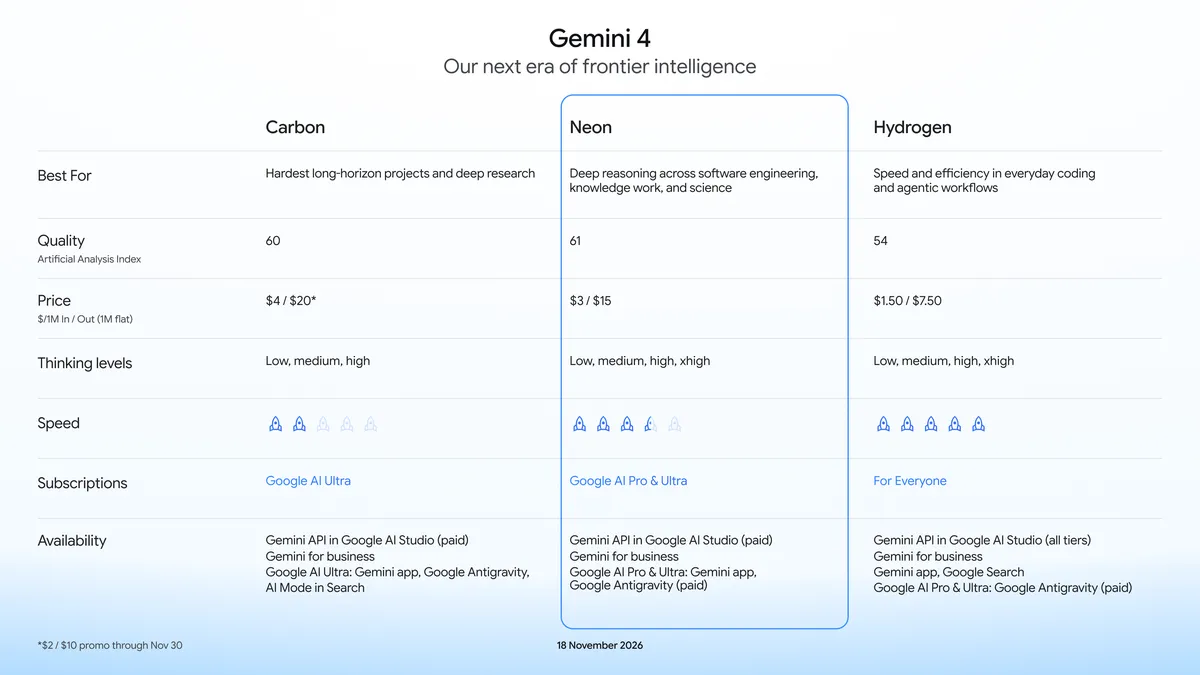
Google released Neon on November 18 as the middle child of the Gemini 4 family, sitting between Hydrogen (fast, everyday work) and Carbon (the heavyweight for long, hard projects). The pitch is Carbon-level output at close to Hydrogen speed. A week in, people have used it to build ski simulators, lab scenes in Blender, and entire game chapters. We went through what Google and its early users are showing off.

Watch it in action
Google's launch post leads with four videos, all built in Antigravity. Click any of them to watch on YouTube.


What Neon actually is
Neon is a reasoning model built for coding, analysis and agent work. The model ID is gemini-4-neon. It has a 1,048,576-token context window shared between input and output, and four thinking levels: Low, Medium, High (the default) and XHIGH.
It reads text, images, video, speech, PDFs, spreadsheets and Office files. It only writes text, but as you'll see below, "text" covers shaders, physics engines and half a million spreadsheet formulas.
The headline trick is orchestration. Neon can plan a job, hand pieces off to cheaper Hydrogen agents running in parallel, then review their work. In Google Antigravity, that's what the /swarm command does.
The numbers
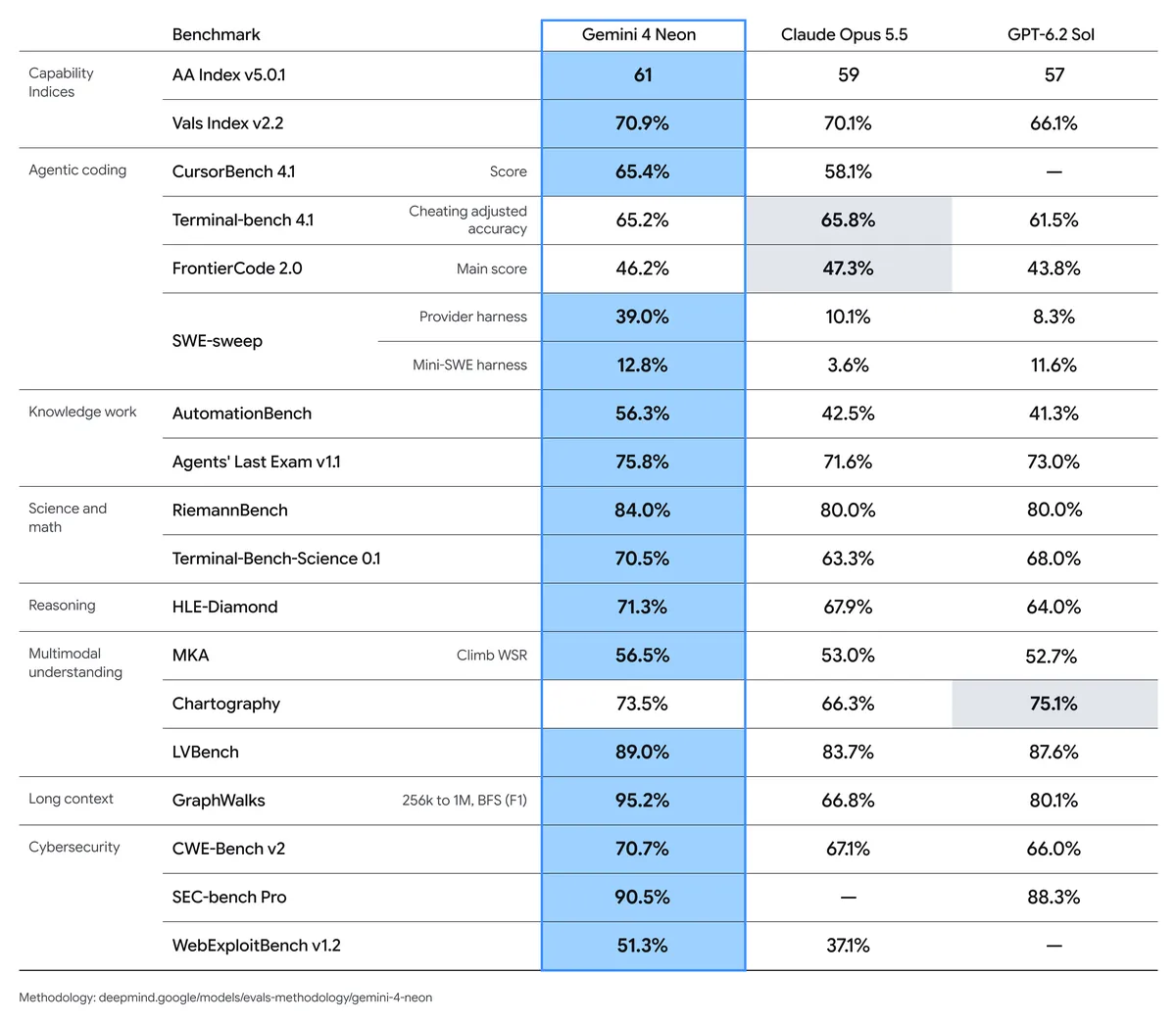
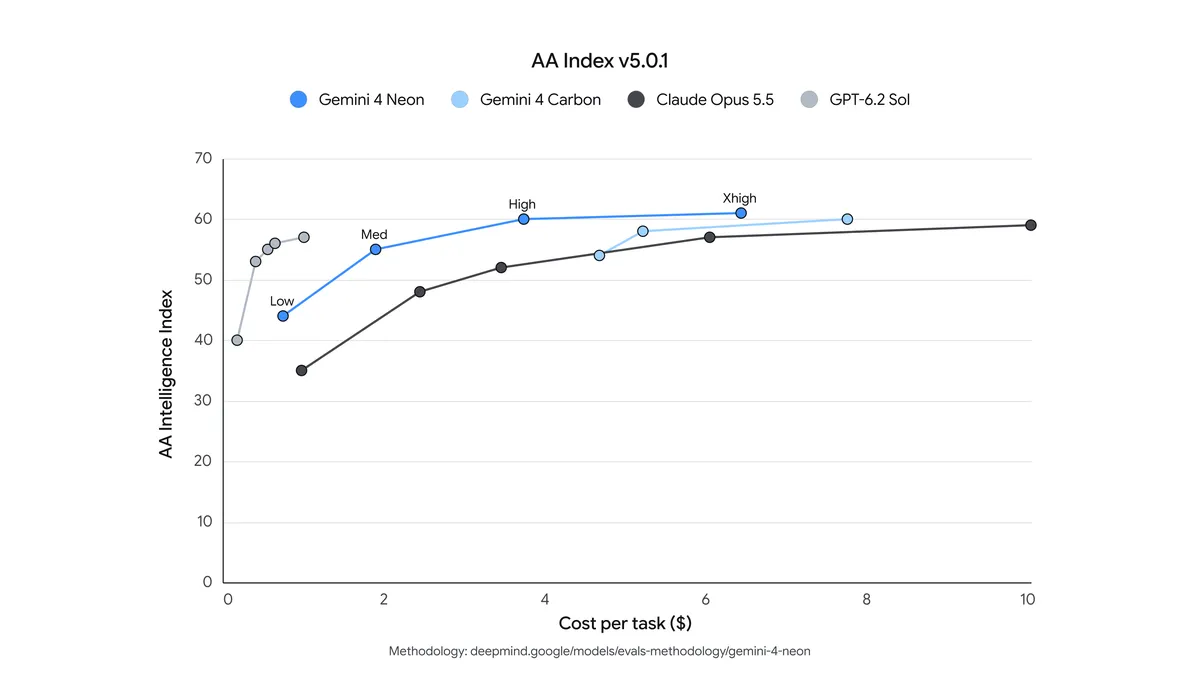
Artificial Analysis puts Neon at 61 on its Intelligence Index at XHIGH, one point ahead of Carbon and third overall. On its Coding Agent Index, Neon scores 59 against 58 for Claude Fable 5.2 and Opus 5.5. It is not a clean sweep. Opus 5.5 still edges it on FrontierCode 2.0 and Terminal-Bench 4.1.
The more interesting number is cost per task. Artificial Analysis found Neon at high effort matches Carbon for less than half the cost per task, and it finishes in roughly 21 minutes where Carbon takes 36. It is fast. Third-party testing clocks it at about 110 tokens per second at XHIGH, nearly double Carbon.
Google also claims first place on Zapier's AutomationBench (56.3%) and Andon Labs' Vending-Bench 2, where Neon ran a simulated vending business to $16,843.
Google's own showcase
These are Google's best picks, so treat them as a ceiling, not an average. They are still impressive.
- Mont Blanc ski simulator. A first-person WebGL2 freeride game on real Chamonix terrain. Google says Neon wrote it from scratch: about 10,200 lines of custom shaders, 120 Hz ski physics, six alpine lines, carved tracks, slab avalanches and spatial audio. No pre-made assets.
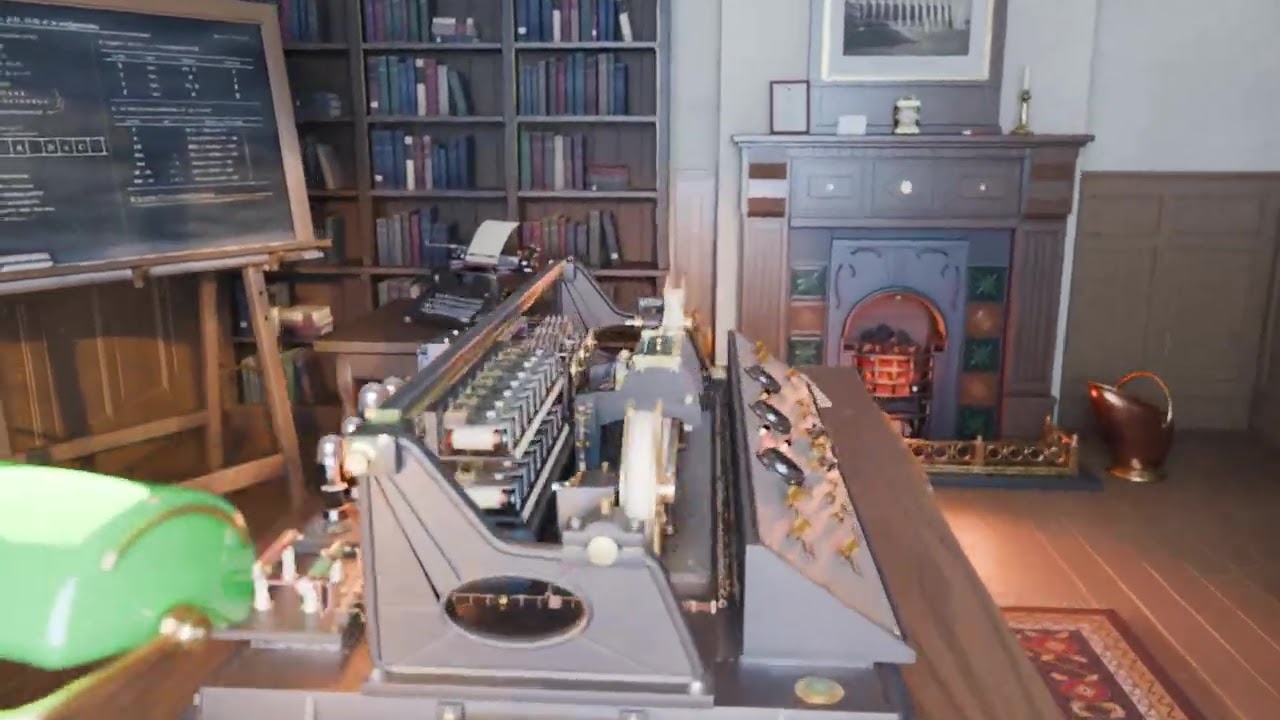
- Alan Turing's 1936 study. A
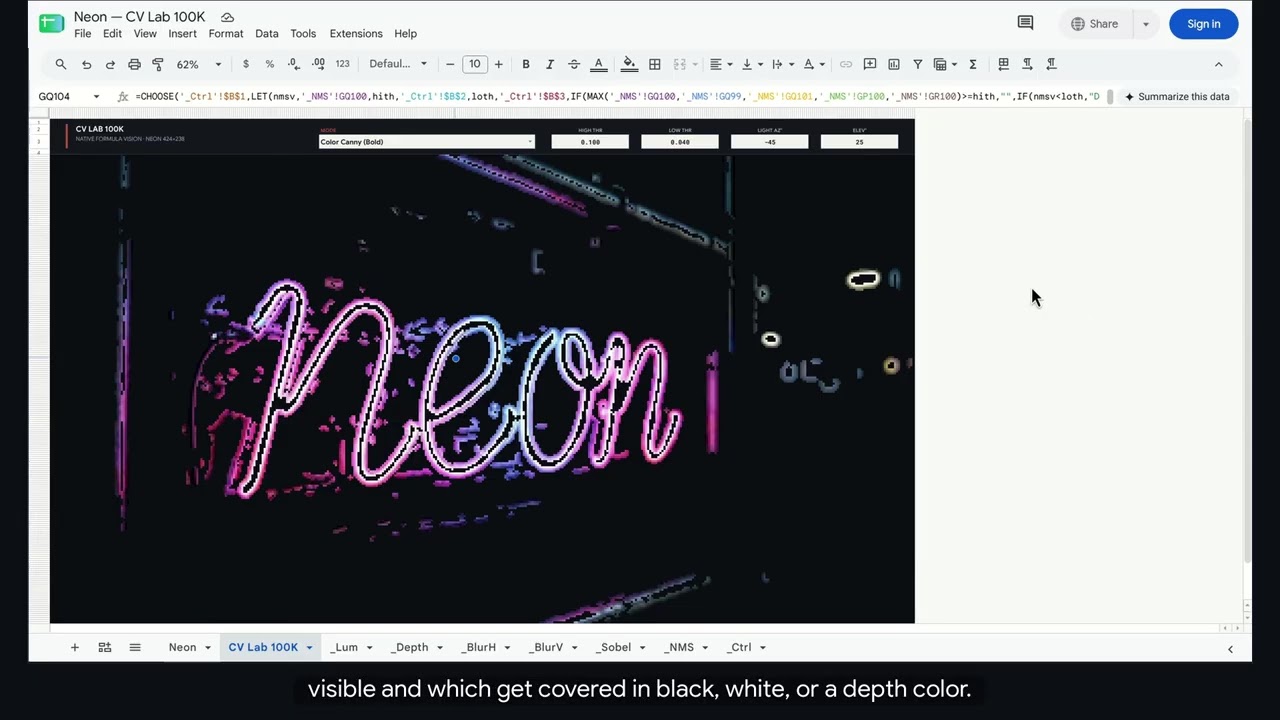
/swarmof agents pulled archival photos and rebuilt Turing's room at King's College, Cambridge, in interactive 3D. There's a working Universal Turing Machine on the desk. - A photo relit inside Google Sheets. An agent swarm rebuilt an image across 100,000 cells using more than 500,000 live formulas. It does edge detection, depth mapping and relighting in six modes, and you can inspect every cell.
- A chemistry lab in Blender. A nod to the model names. Bunsen flames stand in for Carbon and Hydrogen, glowing gas tubes for Argon and Neon.
- A Rube Goldberg machine. Google for Developers posted a 72-second chain reaction set in a 1980s arcade, built to test fast coding and physics reasoning.
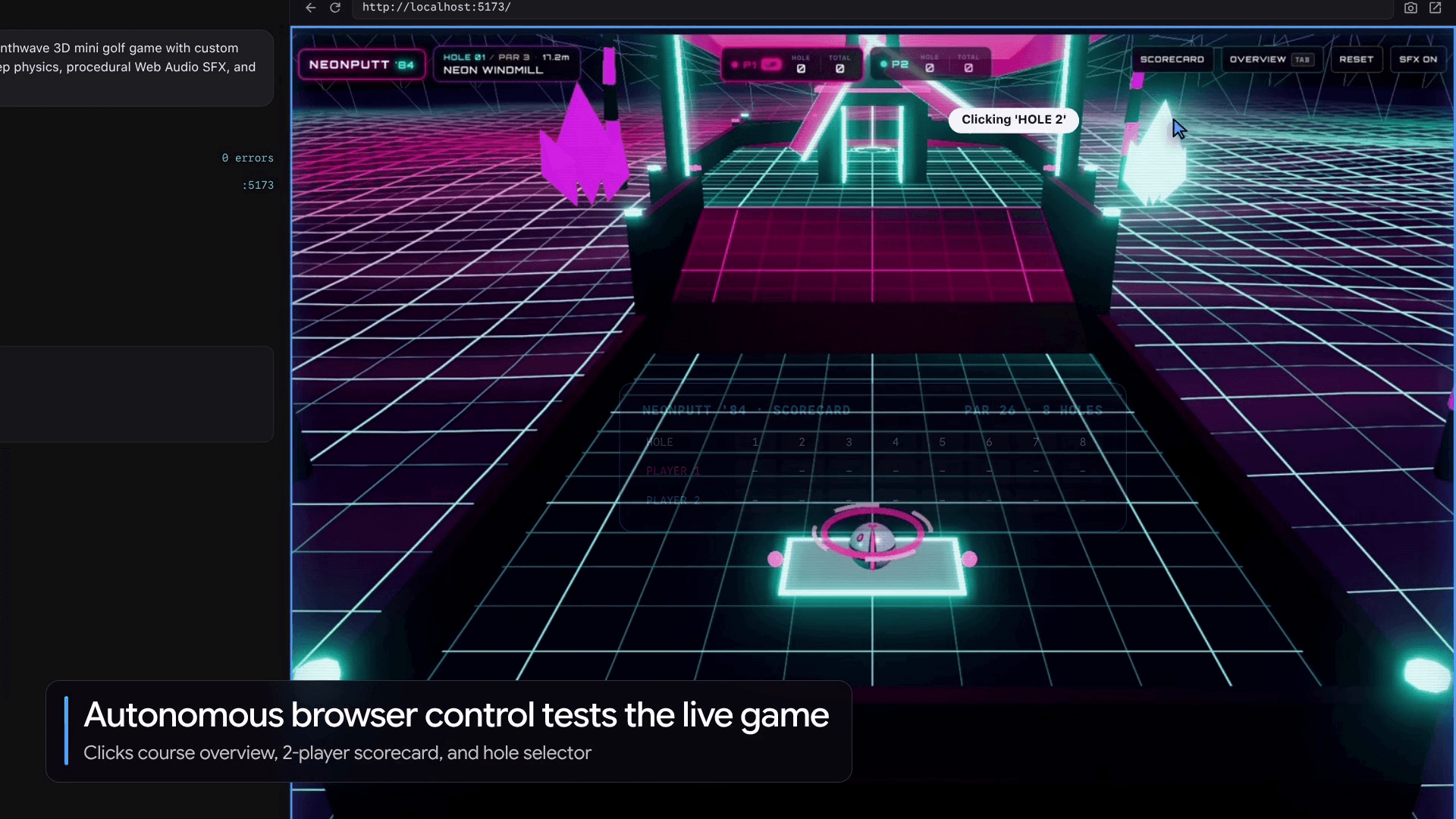
- A game where the AI is player two. Antigravity scaffolded a multi-level game with
/swarm, ran it in the built-in browser, then picked up the second controller itself.
What builders are making with it
The community projects are where Neon gets fun. These come from early-access testers, reviewers and people posting their first experiments.
- 17 demos in a day. Early tester Kimmonismus had Neon build shooters and 3D worlds in Antigravity, 17 in a single day. One build died on a server error and needed a second pass, which is an honest look at the hit rate.
- A 3D room designer. In MindStudio's KingBench tests, Neon built a room editor with 15 furniture types and no WebGL memory leaks.
- A full RPG first chapter. The same tests produced a monster-catching RPG opening with 18 connected maps running at a steady 60 fps.
- Pager, an ops agent. Built with Google's Agent Development Kit and deployed to Cloud Run in about 65 minutes. It watches a demo coffee-shop app, finds a bad payment timeout in under a minute, and fixes it after a human approves. It can read logs and shift traffic but can't delete anything, which is exactly the guardrail you want.
- A baby dragon made of math. Graphics researcher Keenan Crane had Neon model a dragon as a signed distance function in about 38 minutes, using a critique tool that compared each render to a reference image.
- A walk-through of a 1959 house. From a Marcel Breuer floor plan, Neon built a tour that moves room to room through the doors.
- A military diorama in the browser. A seven-agent swarm ran 15 improvement rounds over about four hours. It burned around 16 million tokens, so this is not a cheap afternoon.
- A galaxy collision. More than 500,000 particles, with energy holding within a hundredth of a percent in the stability run.
- Breakout without training. Neon wrote the weights of a neural network directly, with no tools, and averaged about 550 points. That beats the best trained network in published results. It lost badly on Seaquest, though, so don't expect magic everywhere.
- One image to a 3D world. Posts rounded up by Min Choi show users turning a single image into an animated robot dog, a horror game, and a 3D scene with interactive rain and puddles.
Not everything lands. In one Growing Neural Cellular Automata test, a lizard regrew after a cut but came back missing a front leg. Neon is very good, not perfect.
Pricing
Neon costs $3 per million input tokens and $15 per million output tokens, with cached input at $0.15. There is no free API tier.
That's double Hydrogen and 25% below Carbon's standard rate of $4 / $20, which kicks in December 1. Until November 30, Carbon is on a $2 / $10 promo, so Neon is briefly the pricier option per token. Its real savings come from finishing jobs faster and with fewer retries.
Where you can use it
- Gemini app: AI Pro and Ultra, listed as "Deeper analysis" in the model picker. It replaces Argon there.
- Gemini API and Google AI Studio: paid tier only.
- Antigravity and Antigravity CLI: Pro and Ultra, with
/swarmfor multi-agent builds. - Google Cloud: Gemini Enterprise Agent Platform for verified enterprise customers.
Who should try it
If you build browser games, prototypes or anything with real physics, Neon is worth an afternoon. It's at its best when you give it a big, specific goal and let it split the work up. Start in Antigravity, try /swarm on something small, and keep an eye on token use before you point seven agents at a diorama.
If you just need quick answers or small edits, Hydrogen is still cheaper and faster.
Read Google's Gemini 4 Neon announcement or the developer guide. If you build a game with it, submit it here so players can rate it.
No comments yet. Start the conversation.
Sign in to comment