How We Score Games: The 7 Questions Behind Every Verdict
A score out of 10 doesn't mean much on its own. A 7 from one site is a 5 from another. So here's exactly how we get ours.
Every review starts with seven questions. Each one gets its own rating from 0 to 10. Those ratings add up to the overall score, and the overall score sets the verdict: Gem, Solid, Meh or Slop.
Using AI never costs a game points. Plenty of the best games we've played were built with Claude Code, Cursor or a stack of other AI tools. We judge what ends up on your screen, not how it got there.
1. Have the graphics been pushed as far as they go?
This isn't a contest for the most polygons. A pixel art game with a tight palette and readable sprites beats a 3D game with mismatched textures every time.
We ask whether the art does its job:
- Consistency. Do the characters, backgrounds and UI look like they belong to the same game? Mixed art styles are the fastest tell that nobody stepped back and looked at the whole thing.
- Readability. Can you tell the player from the enemies at a glance? Can you see the bullet that killed you?
- Effort past the default. Did the developer stop at the first image the generator gave them, or did they fix the six-fingered hands and the warped text on the shop sign?
- Feedback. Hits flash, explosions shake the screen, coins pop when you grab them. Small effects make a game feel alive.
A 10 here means the art is as good as it gets for the style the game chose. A 2 means placeholder rectangles and stock assets that clash.
2. Are the menus well thought out?
Menus are the first thing you touch and the part most developers rush. We check:
- How many clicks from the title screen to playing. Three or fewer is the goal.
- Whether settings exist at all. Volume, controls and graphics options are the minimum.
- Whether you can remap keys, pause, and quit without closing the browser tab.
- Whether the menus work with the controls the game uses. A gamepad game with a mouse-only menu loses points.
- Whether the tutorial teaches by doing or dumps a wall of text on you.
Good menus disappear. You notice them only when they're bad.
3. How many AI tropes are in the game?
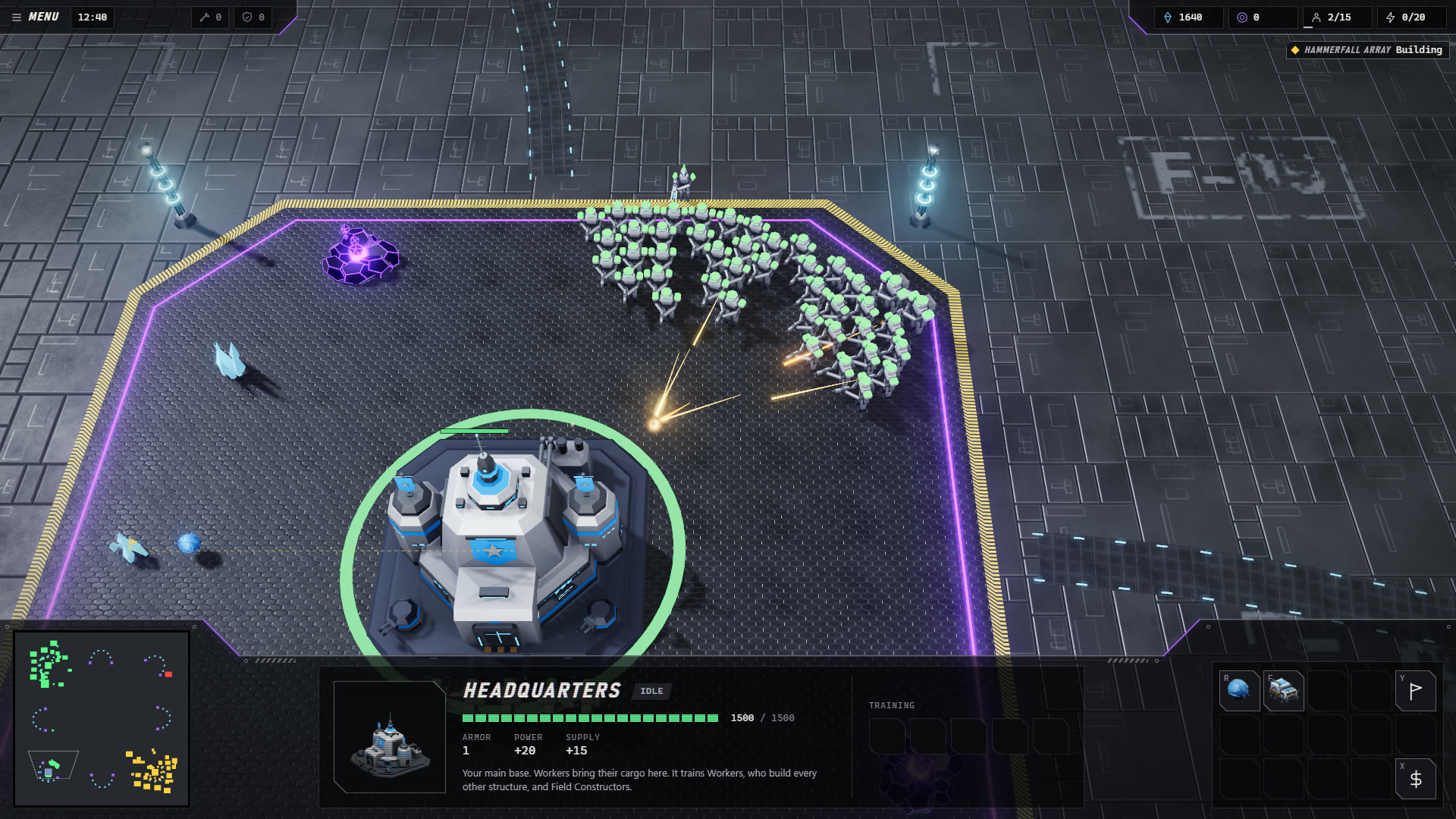
This one is ours. AI tools have habits, and when a developer accepts every default, those habits pile up. We count them. The fewer we find, the higher the rating.
Tropes we see all the time:
- Neon purple and cyan gradients on everything, with a glow on every button.
- Frosted glass panels in the menus.
- Emoji used as icons for items, skills or currency.
- Titles built from the same few words: Neon, Quantum, Echoes, Void, Nexus, Drift.
- Flavor text that sounds like a product launch. "Embark on an epic journey through a realm of endless possibilities."
- An upgrade shop where every item is "+10% damage".
- Particle effects stacked on top of each other until you can't see the game.
- AI art with melted faces, extra fingers or gibberish lettering left in.
One or two tropes is fine. Ten of them stacked together is slop. A game with zero tells and a clear visual identity scores a 10.
4. How original is the idea?
Clones aren't banned. Some of our favorite games are a known genre done well. Originality still matters, and it's the area where AI tools help the least. They're trained on what already exists, so their first suggestion is usually the most common version of the idea.
We ask:
- Is there a twist on the genre, or is this the tutorial project with new colors?
- Does the game have a hook you'd describe to a friend in one sentence?
- Do the mechanics, story or setting do something we haven't seen ten times this month?
A 10 is a game we've never seen before that still works. A 5 is a clean take on a familiar idea. A 1 is the hundredth endless runner with the same jump.
5. Is the game riddled with bugs?
We play every game for at least an hour, or to the end for short games. We write down every bug we hit and how bad it was.
- Crashes and soft locks cost the most. If we lose progress, it shows in the score.
- Broken core mechanics come next. A jump that fails half the time ruins a platformer.
- Collision and physics bugs: falling through floors, getting stuck on corners, enemies walking through walls.
- Cosmetic bugs: overlapping text, flickering sprites, a sound that plays twice.
We report numbers, not vibes. "Crashed twice in 90 minutes, lost one save" tells you more than "a bit buggy". A 10 means we found nothing worth mentioning.
6. Is the game fun?
This question carries the most weight, and it should. A game can look great, run perfectly and still be boring.
Fun is harder to measure, so we look for signs:
- Did we keep playing after our hour was up?
- Is there a reason to come back: new levels, better runs, a score to beat, a story to finish?
- Do the controls feel good? Movement is the thing you'll do most, so it has to feel right.
- Is the difficulty fair? Losing should feel like your fault, not the game's.
- Does the game get more interesting the longer you play, or does it peak in the first five minutes?
If we're checking the clock, the fun rating takes the hit.
7. Does it perform well?
Lots of AI-built games run in a browser, which means they have to work on whatever machine you happen to own. We test on a mid-range laptop and a phone when the game supports mobile.
We check:
- Frame rate during the busiest moments, not the title screen.
- Load times, from opening the link to playing.
- Stutters, input lag and audio that drifts out of sync.
- Memory leaks that make the game slower the longer you play.
- Whether the laptop fan sounds like a jet engine.
A 10 runs smoothly everywhere it claims to run. A 3 is a slideshow once more than ten enemies show up.
How the ratings become a score
Each question gets a rating from 0 to 10. They aren't equal. Fun counts the most, because it's the reason anyone plays:
| Question | Weight |
|---|---|
| Fun | 25% |
| Bugs | 15% |
| Performance | 15% |
| Originality | 15% |
| Graphics | 10% |
| Menus | 10% |
| AI tropes | 10% |
The weighted total is the overall score out of 10. That score sets the verdict:
- Gem (8–10): Play it. Fun, polished, shows real human taste.
- Solid (6–7.9): Worth your time, with rough edges.
- Meh (4–5.9): A good idea that isn't there yet.
- Slop (0–3.9): Low effort. Placeholder art, no real game loop, or broken.
Here's an example. Say a game rates 9 for fun, 7 for bugs, 8 for performance, 6 for originality, 7 for graphics, 5 for menus and 6 for AI tropes. That works out to 7.2, a Solid. Great to play, held back by rough menus and a few too many neon gradients. Fix those and it's a Gem.
Why we break it down
A single number hides the reasons. Two games can both score a 6: one is brilliant and buggy, the other is stable and dull. The breakdown tells you which one you're getting.
It helps developers too. A rating of 3 for menus is a to-do list. Patch the game, tell us, and we'll update the review.
Got a game you want us to score? Submit it and we'll put it through all seven questions.